The One Room That Never Cools, Even Though the System Is Fine
The air conditioner tests out fine and the rest of the house feels great. So why is the back bedroom always five degrees warmer?
August 27, 2026 · 3 min read
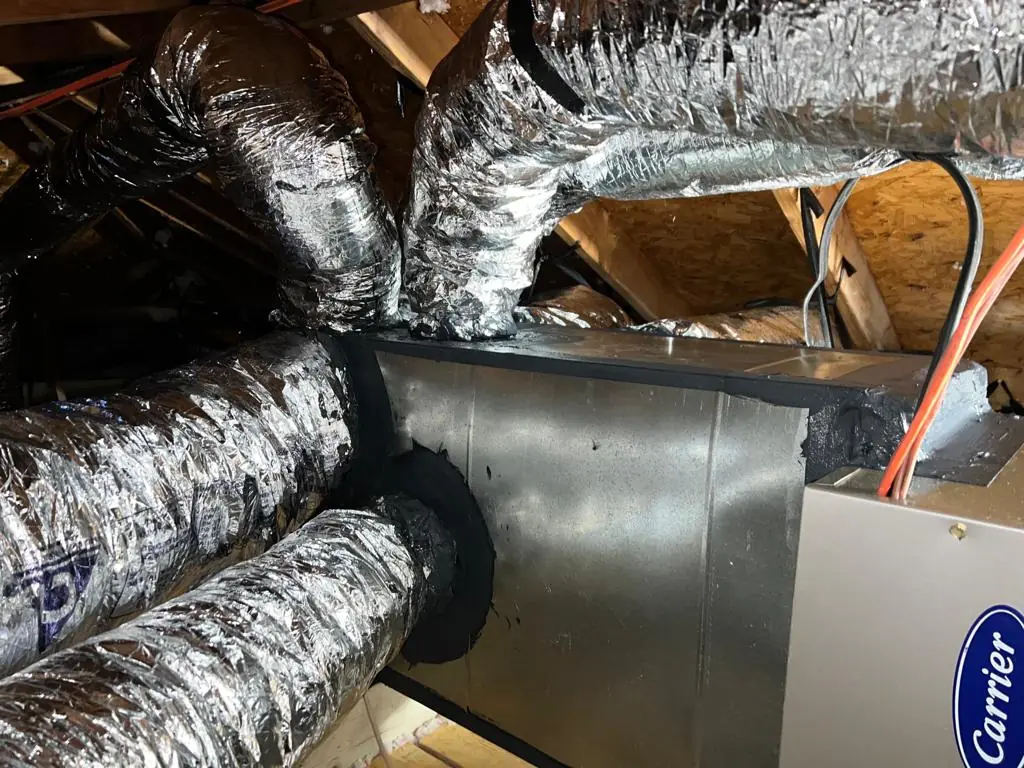
It is one of the most common calls we get, and it almost never turns out to be the air conditioner itself. The rest of the house is comfortable. The thermostat reads exactly where it is set. But one room, usually a back bedroom or a converted office at the far end of the duct run, sits five or six degrees warmer than everywhere else, every single day, no matter what the thermostat says. The unit outside is not lying. The air it is producing is just not all making it to that room.
Where the air actually goes missing
A central system depends on a sealed path from the air handler all the way to each register, and that path runs through an attic that regularly hits well over a hundred degrees in summer. Every joint, seam and connection along that route is a place air can leak out into the attic instead of reaching the room it was meant for.
- Plenum joints and duct seams that were never properly sealed, leaking conditioned air straight into the attic
- Flexible duct that has been crushed, kinked or pinched by something else stored or run through the attic
- Boots and connections behind drywall that have come loose or separated over time
- A return that is undersized for the system, choking airflow for the whole house rather than just one room
- Duct runs that were sized for a different layout before a remodel changed how the rooms are used
Any one of these can be enough to explain a single chronically warm room, because the air handler and the thermostat are both doing their jobs correctly. They just cannot account for cool air that never arrives where it was supposed to go. That is also why closing the vent in the warm room or turning the fan speed up rarely fixes anything. It treats a symptom in a room that is already losing air somewhere upstream of the register itself.
A two-story home adds a second factor on top of the ductwork itself. Warm air rises, so an upstairs room starts the day at a disadvantage no duct sealing alone can fully solve, and it is common for a second-floor bedroom at the end of a long run to run warmer than a downstairs living room even on a system with no leaks at all. That does not mean duct losses are not worth fixing there. It means a warm upstairs room might be a mix of both problems, and it is worth having someone actually check the ductwork rather than assuming the layout of the house is simply working against that one room and nothing can be done about it.
Why sealing matters as much as cleaning
Duct cleaning is worth doing at least once a year to keep the system in good condition, and it matters for indoor air quality as much as comfort. But cleaning and sealing solve two different problems. Cleaning removes what has built up inside the duct. Sealing keeps the air that is supposed to reach a room from leaking out before it gets there. A duct system can be spotless inside and still be losing a meaningful share of its output through unsealed joints in the attic, which is the difference between a system that is clean and a system that is actually delivering what it produces to every room in the house.
Fixing it usually means getting into the attic, pressure-testing the runs feeding the affected room, and re-sealing or replacing whatever section is actually losing air, mastic at the joints and proper support so flexible duct is not sagging or getting pinched again. It is not glamorous work. It is also almost always cheaper and more effective than replacing a system that was never actually the problem to begin with.
The return side of the system is worth the same attention, even though it rarely gets it. A return that is undersized or restricted starves the whole air handler of the volume of air it needs to move, which can leave every room a little short rather than just one. That is a different fix from resealing a single leaky run, but it comes from the same place: someone actually looking at the ductwork as a whole system, from the return through the handler and out to every register, instead of treating one warm room as an isolated complaint with its own separate cause.
Houston Air Comfort, (832) 334-5696
Call (832) 334-5696More articles
The Attic Problem Nobody Points a Thermostat At
Most of the heat working against your air conditioner this summer isn't coming through the walls. It's coming through the roof.
What Actually Happens During a Real Maintenance Visit
A five-minute filter check and a signature isn't a maintenance visit. Here's what one actually looks like, and why it matters twice a year here.